AI Sourcing Agent vs. Traditional Recruiting: What Actually Changes
Compare AI sourcing agents to manual recruiting across speed, cost, quality of hire, and scalability. Data-backed analysis with real benchmarks.

The recruiting industry talks about AI in broad, vague terms. “It will transform hiring.” “It’s the future of talent acquisition.” But when you sit down with a recruiter who has 14 open roles, a hiring manager who needed someone yesterday, and a sourcing pipeline that runs on Boolean strings and browser tabs, the real question is simpler: what actually changes when you replace manual sourcing with an AI agent?
This article puts the two approaches side by side. Not theory, not hype. Concrete differences across speed, cost, candidate quality, and scalability, with enough detail for you to decide whether an AI sourcing agent belongs in your workflow today.
The recruiter’s sourcing workflow in 2024 vs. 2026
Think back to what sourcing looked like just two years ago. A recruiter would open LinkedIn Recruiter, spend 15 minutes refining Boolean strings, scroll through profiles one at a time, open promising ones in new tabs, copy names and emails into a spreadsheet, then switch to an outreach tool to send a templated message. Repeat that across three or four sourcing channels (LinkedIn, GitHub, internal database, maybe a job board) and the day disappears quickly. The sourcing itself was the bottleneck, and the recruiter’s judgment, the part that actually matters, was buried under hours of mechanical searching.
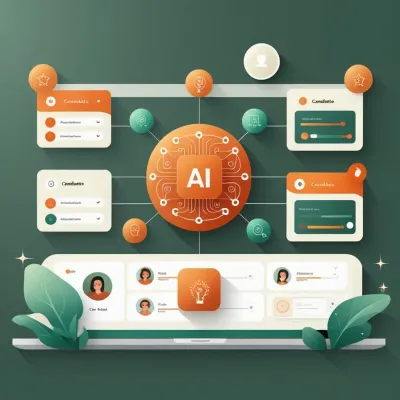
Fast forward to 2026. With Leonar’s AI sourcing agent, the same recruiter describes the role in plain language: “Senior backend engineer, 5+ years experience, comfortable with distributed systems, ideally has worked at a B2B SaaS company.” The agent searches across 870M+ profiles from 30+ sources simultaneously. It ranks candidates not just by keyword match but by career trajectory, skill adjacency, and contextual fit. Within minutes, the recruiter has a shortlist of qualified candidates already enriched with contact data and ready for personalized outreach.
The difference is not incremental. It is structural. In the old model, sourcing consumed 60 to 70 percent of a recruiter’s productive hours. In the new model, that time collapses to a fraction, freeing the recruiter to focus on candidate engagement, hiring manager alignment, and closing. The role of the recruiter does not go away. It shifts toward the high-value activities that actually determine whether someone accepts an offer.
Speed and volume: how AI sourcing agents compress the recruiting timeline
The numbers tell the story clearly. Data from Leonar’s customer base shows a 67% reduction in time-to-source when recruiters adopt AI sourcing tools. That figure makes intuitive sense once you break down the math.
According to Entelo, a recruiter spends roughly 13 hours per week on sourcing activities for a single open role. Managing multiple roles simultaneously means most of the working week is consumed by searching, screening, and reaching out to candidates. That leaves limited time for interviews, hiring manager communication, and the relationship-driven work that actually closes hires. When sourcing alone eats up the majority of available hours, the pipeline moves slowly and capacity per recruiter stays stubbornly low.
An AI sourcing agent changes the arithmetic entirely. Instead of reviewing profiles one by one, the agent evaluates hundreds of thousands of candidates across multiple sourcing platforms in parallel. A search that would take a recruiter three to five days of focused effort is completed in minutes. The recruiter receives a ranked shortlist, reviews the top candidates (a task that takes 20 to 30 minutes instead of 20 to 30 hours), and moves directly into outreach.
This compression has a cascading effect on the entire recruiting timeline. When sourcing takes hours instead of weeks, shortlists reach hiring managers faster, interview loops start sooner, and offers go out before the best candidates have accepted positions elsewhere. In competitive markets for engineering, product, and leadership talent, that speed advantage is often the difference between landing a first-choice candidate and settling for whoever is still available.
If you want to understand how AI sourcing agents work at a technical level, we cover the mechanics in a dedicated post.
Cost comparison: agent-assisted sourcing vs. building a manual team
Recruiting leaders often evaluate new tools by asking what they cost. The better question is what they cost relative to the alternative.
Consider the fully loaded cost of a junior sourcer in the United States: salary between $55,000 and $75,000 per year, plus benefits, equipment, software licenses, and management overhead. That sourcer can realistically handle 8 to 12 open roles at a time, depending on complexity. If your hiring plan calls for 40 roles per quarter, you need a team of three to five sourcers just to maintain coverage.
An AI sourcing agent subscription typically starts at a fraction of a single headcount. Even at the higher end of tool pricing, you are replacing tens of thousands of dollars in labor cost with a platform that scales across every recruiter on the team. The savings become even more pronounced when you factor in the indirect costs that manual sourcing creates.
Time-to-fill is the hidden expense most teams undercount. Every day a role stays open, the business absorbs the cost of lost productivity, delayed projects, and overburdened existing staff. HR industry estimates suggest the average cost of a vacant position falls between one and three times the daily salary of the role. For a senior engineering position paying $180,000 per year, that translates to roughly $500 to $1,500 per day of vacancy. If an AI agent shaves even two weeks off the average time-to-fill, the savings per role can exceed $7,000.
Then there are agency fees. Many companies turn to external recruiters when internal sourcing cannot keep pace. Agency fees typically run 15% to 25% of the placed candidate’s first-year salary. For a $150,000 hire, that is $22,500 to $37,500 per placement. Teams that deploy Leonar’s AI sourcing agent often reduce their reliance on agencies significantly, because the internal team can now source at a speed and volume that previously required external help.
The ROI case does not hinge on any single factor. It is the combination of lower direct sourcing costs, faster fills, and reduced agency dependency that makes agent-assisted sourcing compelling from a financial perspective.
Quality of hire: does AI actually find better candidates?
This is where skepticism runs deepest, and understandably so. Recruiters have spent years refining their instincts for what makes a great candidate. The idea that software can do this better feels counterintuitive.
The distinction that matters is between keyword matching and contextual matching. Traditional sourcing tools, including LinkedIn Recruiter’s built-in search, rely heavily on keyword overlap. If the job requires “Kubernetes experience” and a candidate’s profile says “Kubernetes,” it is a match. If the candidate has deep container orchestration experience but uses different terminology, the tool misses them.
AI sourcing agents approach matching differently. They analyze career trajectories (progression from IC to lead, transitions between industries), skill adjacency (a candidate who has worked extensively with Docker and microservices likely has relevant Kubernetes-adjacent skills), and contextual signals that suggest fit beyond what appears in a keyword scan. Leonar’s profile filtering and scoring system evaluates candidates along multiple dimensions simultaneously, producing a quality score that reflects genuine suitability rather than surface-level keyword density.
The practical result is twofold. First, AI sourcing reduces false positives: candidates who look perfect on paper but lack the depth or trajectory that predicts success in the role. Second, it surfaces candidates who would have been invisible to keyword-based searches, expanding the talent pool in meaningful ways. This is particularly valuable for roles where the ideal candidate comes from a non-obvious background, something increasingly common as career paths become less linear.
Industry analyses of AI-assisted recruiting workflows report that AI-selected candidates show approximately 14% higher interview success rates and up to 35% improvement in quality-of-hire metrics compared to purely manual sourcing. These gains come primarily from the consistency of evaluation: the agent applies the same criteria across every candidate without fatigue or recency bias distorting the results.
Does this mean AI always finds better candidates than a skilled human sourcer? Not necessarily. A great sourcer with deep domain expertise and a strong network will still uncover candidates that no algorithm can reach. But the AI agent raises the floor. It ensures that the baseline quality of every search is consistently high, even for roles outside the recruiter’s core specialty, and it does so without the variability that comes with human attention and fatigue.
Scalability: from 5 open roles to 50 without adding headcount
Scaling a recruiting operation has traditionally meant scaling headcount. More roles to fill, more sourcers to hire. That creates a familiar cycle: ramp-up time for new hires, inconsistent quality during onboarding, management overhead, and the inevitable downsizing when hiring slows.
AI sourcing agents break this pattern. A single recruiter equipped with an agent can handle significantly more requisitions because the time-intensive sourcing work is offloaded. Instead of being capacity-constrained at 10 to 15 roles, a recruiter can manage 25 to 35 active searches without sacrificing candidate quality.
For staffing agencies, this scalability is transformative. An agency handling multiple client mandates simultaneously cannot afford to hire dedicated sourcers for each account. With an AI agent, one recruiter can run parallel searches across different industries, geographies, and seniority levels, all from a single dashboard. The agent works around the clock. It does not take vacations, does not need ramp-up time on a new client, and does not lose institutional knowledge when it moves to a different project.
In-house talent acquisition teams face a similar challenge during hiring surges. A Series B startup that closes a funding round and needs to double headcount in six months traditionally has two options: hire temporary sourcers or engage agencies. Both are expensive and slow to deploy. An AI sourcing agent provides a third option: scale output from the existing team immediately, with no onboarding lag and no incremental cost per search.
The combination of recruiting automation and AI sourcing creates a multiplier effect. Automated outreach sequences through LinkedIn and email mean that the candidates surfaced by the agent can be engaged at scale too, not just found but actively brought into the pipeline with personalized messaging.
What AI sourcing agents still cannot replace
Intellectual honesty matters here, both for building trust with you as a reader and for accurately setting expectations about what these tools can and cannot do.
AI sourcing agents excel at finding, ranking, and initiating contact with candidates. They are measurably faster, more consistent, and more scalable than manual sourcing. But there are dimensions of recruiting where human judgment remains irreplaceable.
Reading cultural nuance in a live conversation is one. A candidate might say all the right things on paper and in an initial screen, but something in the way they describe their ideal working environment signals a mismatch with your team’s culture. That kind of perception requires emotional intelligence and contextual awareness that AI does not possess.
Negotiating offers with empathy is another. Compensation discussions involve personal circumstances, competing priorities, career aspirations, and sometimes difficult tradeoffs. A recruiter who can navigate these conversations with genuine care and flexibility will always outperform an automated sequence.
Assessing soft skills in real time, building long-term relationships with passive candidates who are not ready to move yet, advising hiring managers on realistic expectations, and closing candidates who are weighing multiple offers: these are all areas where the human recruiter’s role is not just valuable but essential.
The shift that AI sourcing creates is a role evolution, not a role elimination. The recruiter moves from “finder” to “closer and advisor.” The time previously consumed by mechanical searching is redirected toward the relationship-driven, judgment-intensive work that determines hiring outcomes. This is, ultimately, a better use of a recruiter’s skills and training.
AI bias and fairness: the question every recruiting team should ask
Any honest comparison of AI sourcing and traditional recruiting needs to address bias. AI models learn from historical data, and if that data reflects past biases, the model will reproduce them. The most widely cited example is Amazon’s experimental resume screening tool, which was scrapped after the company discovered it penalized resumes containing the word “women’s” (as in “women’s chess club” or “women’s college”). The system had learned from a decade of hiring patterns that skewed heavily male, and it encoded that skew into its scoring.
This is not a fringe risk. Any AI sourcing tool that ranks candidates based on patterns in past hiring decisions can inherit the same blind spots, favoring certain schools, employers, job titles, or demographic proxies unless the system is deliberately designed to counteract those patterns. Responsible deployment of AI sourcing requires regular bias audits, diverse and representative training data, and human oversight at every decision point where a candidate is advanced or rejected.
At the same time, it would be misleading to frame this as “AI is biased, humans are not.” Manual recruiting carries well-documented biases of its own: affinity bias (favoring candidates who resemble the interviewer), name bias (studies show identical resumes receive different callback rates depending on the name at the top), and availability bias (overweighting recent or memorable candidates). The real question is not whether AI introduces bias. It is whether a well-audited AI system, combined with human oversight, can produce less biased outcomes than purely manual processes. The evidence so far suggests it can, but only when teams treat fairness as an active, ongoing practice rather than a box to check at launch.
The hybrid model: built-in AI plus your own agents
The most effective recruiting teams in 2026 are not choosing between AI and human effort. They are building hybrid workflows that combine both.
Leonar’s approach to this is deliberately open. The platform includes built-in AI for candidate matching, profile scoring, and automated outreach. These capabilities are available out of the box, with no configuration or technical setup required. A recruiter can deploy an AI sourcing agent on a new role within minutes and start receiving qualified candidates immediately.
But Leonar also recognizes that recruiting teams increasingly want to connect their own AI tools into the workflow. Through an open API and support for the MCP (Model Context Protocol), teams can integrate external AI systems like Claude, ChatGPT, or custom-built agents directly into their recruiting stack. This means your AI agents can read candidate data from Leonar, trigger searches, update pipeline stages, and send outreach, all programmatically.
This flexibility matters because the AI landscape is evolving rapidly. A platform that locks you into its own AI and nothing else becomes a constraint as new capabilities emerge. The hybrid model, built-in intelligence plus open extensibility, gives recruiting teams the best of both worlds: immediate value from native AI features and the freedom to experiment with the open API and MCP approach as the technology matures.
For teams evaluating best AI recruiting tools, this architectural openness is an increasingly important differentiator. The question is no longer just “how good is your AI?” but “how well does your AI play with the rest of our stack?”
How to run a pilot: comparing AI sourcing to your current process
Theory and benchmarks are useful, but the most convincing evidence will come from your own data. Here is a straightforward framework for testing whether an AI sourcing agent delivers measurable improvement over your current approach.
Start by selecting two to three open roles that are similar in seniority, function, and market difficulty. Ideally, choose roles you have filled before so you have historical benchmarks to compare against. Assign one role to your traditional sourcing workflow (Boolean search, manual outreach, existing tools) and one to the AI agent.
Track four metrics across both approaches. First, time-to-shortlist: how many days from kickoff to delivering a qualified shortlist of five to ten candidates to the hiring manager. Second, outreach response rate: the percentage of sourced candidates who reply to initial outreach. This measures not just volume but relevance, since candidates who are well-matched to the role respond at higher rates. Third, candidate quality score: have the hiring manager rate each shortlisted candidate on a simple 1 to 5 scale after reviewing their profile. Fourth, cost per qualified candidate: total hours spent (multiplied by hourly cost) plus any tool costs, divided by the number of candidates who advance past initial screen.
Run the pilot for four to six weeks, long enough to account for variability in candidate responsiveness and hiring manager availability. At the end, compare the metrics side by side. In our experience working with recruiting teams across industries, the AI-assisted approach consistently outperforms on time-to-shortlist and cost per qualified candidate, while matching or exceeding manual sourcing on quality scores.
The pilot also serves a secondary purpose: it helps your team build confidence with the tool before rolling it out broadly. Recruiters who see the results firsthand become advocates rather than skeptics, which makes adoption smoother across the organization.
If you are ready to test this yourself, Leonar’s AI sourcing agent is designed for exactly this kind of structured evaluation. Start with a few roles, measure everything, and let the data guide your decision.

Author
Pierre-Alexis Ardon
Co-founder
Co-founder at Leonar, focused on AI recruiting systems, sourcing automation, and search optimization.