Top 6 best Waalaxy alternatives for recruiters
Waalaxy is for sales. It lacks ATS sync. Discover 6 alternatives and see why Leonar is the only automation tool designed specifically for recruiters.


If you work in recruitment, there is a very high probability that your first automation tool was Waalaxy. It is the gateway of LinkedIn automation because it is colorful, the interface is beautiful, and it costs significantly less than a LinkedIn Recruiter license. For many, it is the first time they realize they do not have to manually send dozens of connection requests every single day.
However, as your team grows and your hiring targets get more aggressive, the cracks start to show. You eventually realize that a tool built for selling software isn’t necessarily built for “selling” a career. If you are ready to graduate from Waalaxy, here is why you should switch and exactly which tools you should consider.
The Waalaxy Phase: Why recruiters use it
Recruiters flock to Waalaxy for three very valid reasons. First, the simplicity is unmatched; you can launch a campaign in five minutes without needing complex boolean setups or coding skills. Second, the price is significantly cheaper than enterprise recruiting stacks. Finally, it offers a sense of safety by managing daily limits automatically in the cloud. It works wonders for freelancers and solo founders, but for professional recruiters who rely on LinkedIn recruiter automation tools for high-volume hiring, it eventually hits a wall.
The Limits: Why Waalaxy breaks at scale
The moment you try to integrate Waalaxy into a serious recruitment workflow, you encounter three major problems that hinder productivity.
The first is the “Candidate vs. Lead” problem. Waalaxy treats everyone as a lead in a sales funnel. In recruitment, a candidate is not a lead. You need to track skills, current roles, and past interactions, but Waalaxy flattens these complex candidate profiles into simple rows in a sales CSV.
The second issue is the ATS data silo, which is often the dealbreaker. Waalaxy does not natively sync with your ATS. This means every time you message a candidate and they reply, you have to manually copy-paste that conversation into your database. If you don’t, your team has no idea you already reached out, leading to unprofessional double-messaging.
Finally, there is the risk of “LinkedIn Jail.” While Waalaxy has safety features, it is a wrapper over LinkedIn. Heavy usage, especially by aggressive recruiters, can flag LinkedIn’s detection systems and put your personal profile at risk. If you want to learn how to safely scale your outreach, our guide on how to automate LinkedIn connection requests covers the best practices to stay within LinkedIn’s limits.
Quick comparison: 6 best alternatives to Waalaxy
6 alternatives to Waalaxy
There are several tools on the market that can replace Waalaxy. While most of them were originally designed for sales teams, there is one distinct option built specifically for the needs of recruitment professionals.
Leonar
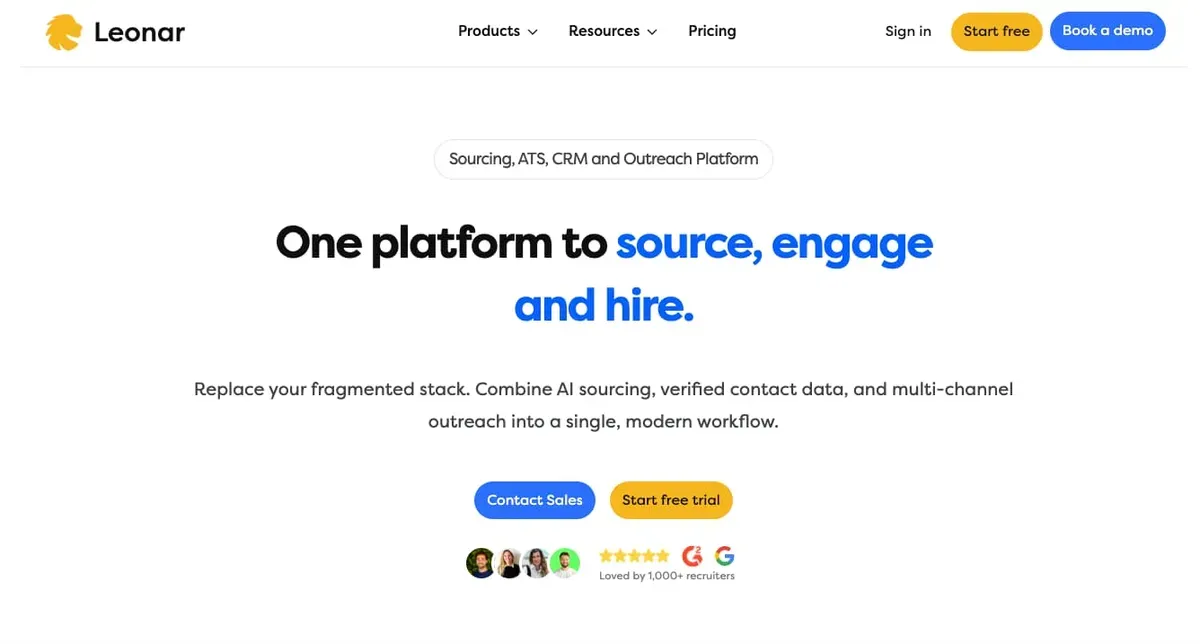
This is the only alternative on this list that is designed by recruiters for recruiters. Where Leonar truly shines is in its multi-channel outreach automation. Unlike other tools that limit you to standard connection requests, Leonar lets you build automated message sequences across LinkedIn, InMail, email, and even WhatsApp. It acts as a complete sourcing engine because it automatically finds candidate contact information, such as emails and phone numbers, to make this multi-channel approach possible.
It integrates seamlessly with all premium LinkedIn accounts, including Recruiter and Sales Navigator, making it a robust choice for both in-house teams and agencies looking to reduce sourcing time and increase response rates. Leonar’s LinkedIn and email automation features let you build compliant, multi-step sequences without the risk of account restrictions. Additionally, Leonar is versatile enough to either integrate with your current ATS or function as a standalone ATS.
Linked Helper
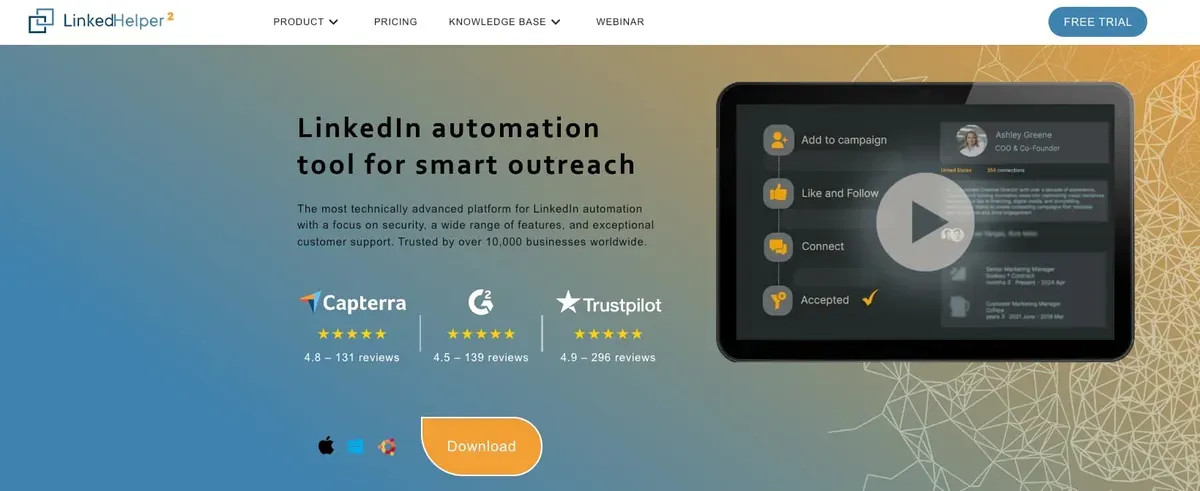
Linked Helper is often considered the heavy-duty veteran of LinkedIn automation. It is a desktop-based application, meaning it runs locally on your machine rather than in the cloud. This gives it immense power and allows it to perform complex tasks that cloud tools often cannot, such as automatically endorsing skills or inviting people to groups. However, because it takes over your browser, it can be more technical to set up and requires your computer to be active to run campaigns.
La Growth Machine (LGM)
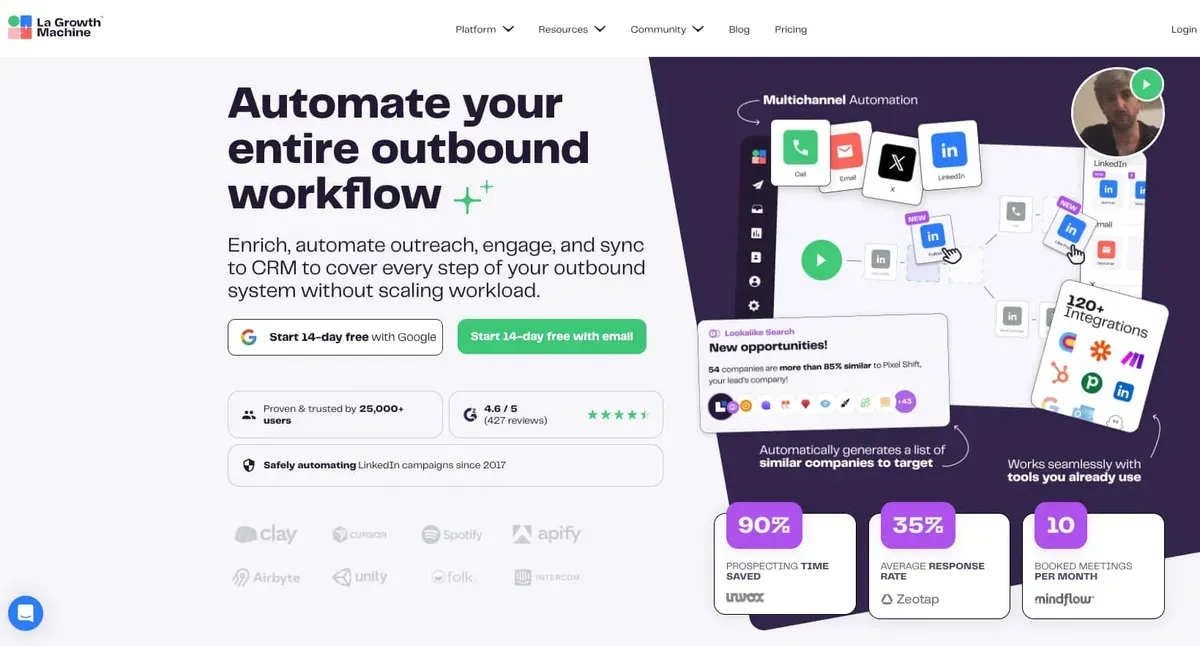
For those who consider themselves power users, La Growth Machine is a strong contender. It is ideal for recruiters who want to build highly complex “if this, then that” workflows. For example, you can design a sequence that visits a profile, waits two days, sends an email, and then sends a LinkedIn DM only if they clicked a link in the email. It supports voice messages and Twitter integration, making it a great choice if your candidates hang out in tech-heavy circles where multi-channel touchpoints are standard.
However, be warned: it is really complicated to use. The learning curve is steep, and setting up these complex workflows requires a technical mindset. If you just want to hire someone without spending hours configuring logic trees, this might be overkill.
PhantomBuster
PhantomBuster is often mistaken for just a scraping tool, but it is actually a powerful engine for building custom outreach sequences. While it does excel at extracting data—such as scraping every member of a “Python Developers” group—it also allows you to design sophisticated outbound campaigns. You can chain different “Phantoms” together to create a workflow that scrapes a profile, finds the email, connects on LinkedIn, and sends a follow-up message if the request is accepted. It offers more flexibility than a standard campaign tool but requires a “builder” mindset to set up the workflows effectively.
Lemlist
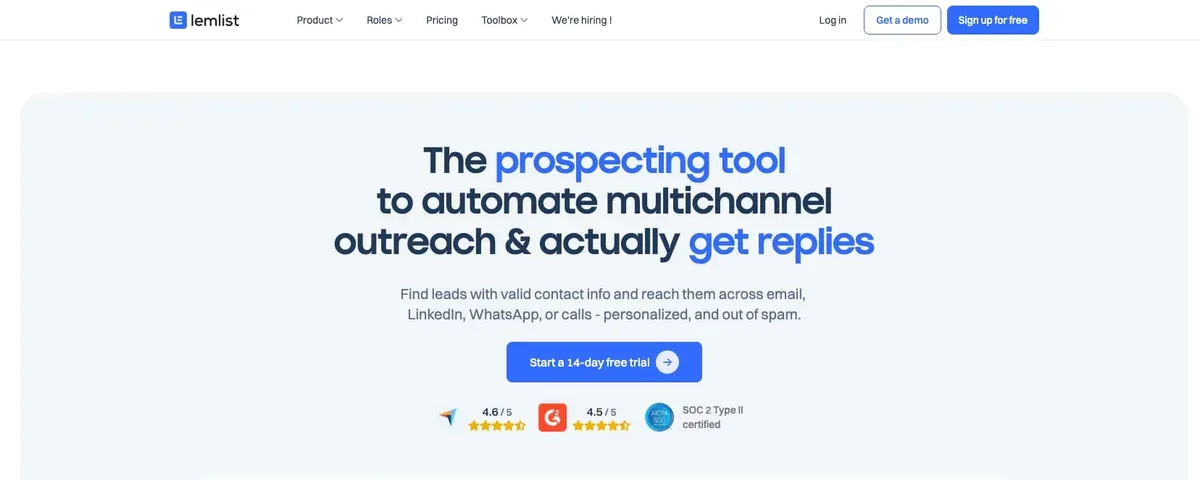
If your recruitment strategy relies mainly on cold email rather than LinkedIn, you should skip Waalaxy and use Lemlist. It is an email-first platform with some of the best deliverability technology in the industry, ensuring your messages land in the primary inbox rather than spam. It also offers “lemwarm,” a feature that warms up your email domain to protect your sender reputation.
Dripify
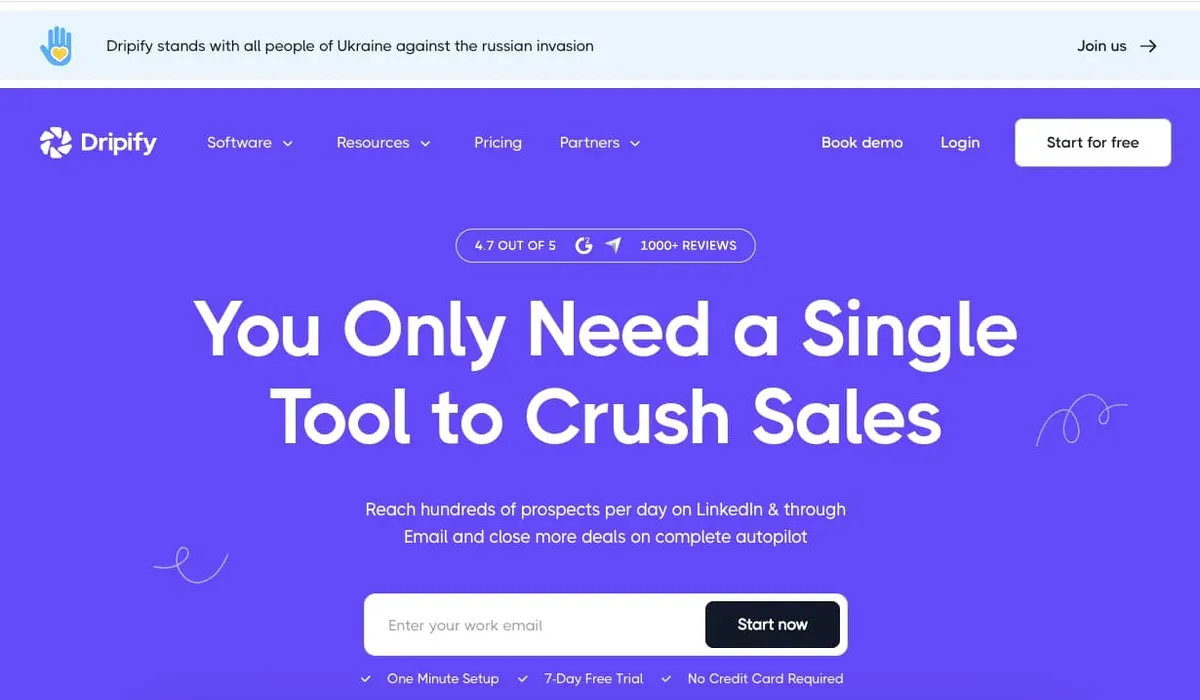
Dripify is the tool most similar to Waalaxy in terms of user experience. It operates entirely in the cloud and offers a visual “drip” builder that many find more intuitive than Waalaxy’s list-based interface. It allows you to create linear sequences easily and provides a clean dashboard for tracking metrics. If you want a tool that feels like Waalaxy but offers different safety protocols and a fresh interface, this is the closest direct swap. However, if you are looking for a completely different approach to hiring, this may not be the drastic change you need.
Conclusion
The right tool depends entirely on your workflow. If you want a simple “sales” tool to blast messages, the sales-focused alternatives like Dripify or La Growth Machine are powerful options. However, if you are looking for a solution that actually understands the recruitment process—handling InMails, syncing with your ATS, and managing candidate data across WhatsApp and Email—Leonar is the clear winner as the only purpose-built tool for recruiters in this lineup. For a broader look at the sourcing landscape, check out our comparison of the best talent sourcing platforms and our deep dive into LinkedIn automated messaging strategies that drive real responses.

Author
André Farah
Co-founder
Co-founder at Leonar, focused on recruiting workflows, sourcing strategy, and outbound process design.