LinkedIn Connection Request: 5 Messages
A complete guide for recruiters about LinkedIn connection request messages along with 5 templates you can use with potential candidates.


Linkedin connection requests are often used by recruiters in their sourcing. In this article, you will find out why you need to use them more often in your sourcing recruitment strategy and some templates that can be helpful and that have already proved themselves.
👉 You may be also interested to know how to send automated connection request on Linkedin. Check our blog post on how to automate Linkedin Connection Requests.
What is a connection request on Linkedin?
A connection request is used on Linkedin to add people to your network. You can send connection requests to people you know or people you want to engage and connect with. Linkedin also allows you to add a note to your request, but it needs to be less than 300 characters.
Linkedin connection request messages Vs Inmail messages
Linkedin connection requests seem to have a better response rate than inmail messages.
We estimated that the average response rate to our Inmail messages is 14%, whereas our acceptance rate to connection requests is 56%
A candidate accepting a connection request does not mean that he will answer eventually. However, he is now in your network and you will be able to reach out to him straight to his Linkedin inbox.
By clicking on Contact Info on his profile, you may also find his personal email address and his phone number, which is another advantage of the connection request.
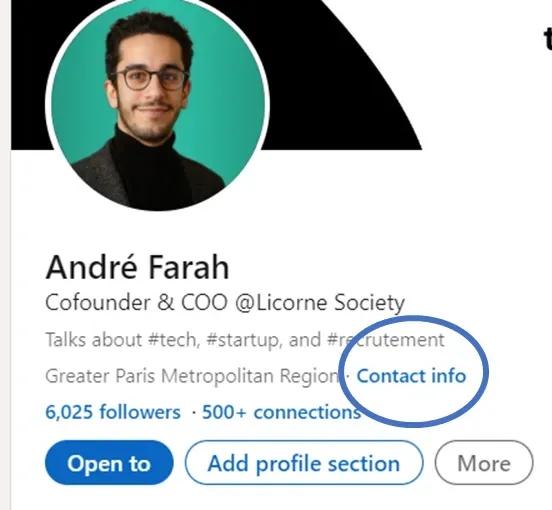
Last but not least, Inmails, if not accepted by the candidates, can be really expensive. Indeed, you have a limited number of Inmails available, depending on the plan you have (Linkedin Recruiter Lite or Linkedin Recruiter Pro). After reaching this limit, the price charged by Linkedin is about $1.50 for each Inmail. Using more connection requests will help you reduce your outbound recruitment costs.
👉Check out our blog post: LinkedIn InMails vs. Connection Requests.
How many Linkedin connection requests can I send each week?
Linkedin is not 100% transparent on the number of the connection requests you can send each week. It seems that the limit is between 100 and 200 connection requests per week.
How to send connection requests on Linkedin with a note or a message ?
The standard way to send connection requests is by going on the Linkedin profile of the candidate and clicking “Connect”.
If the button is not displayed, you will have to click on the “More” button, and then “Connect”

After this step, you will be able to add a note to your connection request. This note is limited to 300 characters maximum.
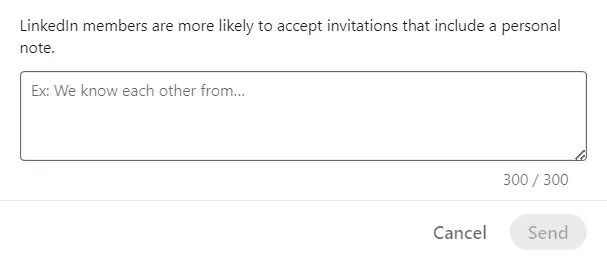
This will help you save a lot of time and encourage you to use the connection request.
What if I want to automate the connection requests sending or, to send them to multiple recipients?
Linkedin does not have a feature to automate the connection requests. It is not possible to send connection requests messages to multiple recipients.
However, by using Leonar, you will be able to design automated sequences which include connection requests. For a deeper dive into this topic, read our complete guide to LinkedIn automated messaging.
Mistakes you need to avoid in your connection requests messages on Linkedin
Before sharing the perfect connection request messages used by the most talented recruiters and talent acquisition managers, here is a quick list of the common mistakes you need to avoid while sending sourcing messages:
- Get the first name wrong on the candidate => “Hello John” / “I’m Mary” / “Oh sorry…”.
- Leaving tags in the note: “Hello [First name]”;
- Share a job offer that has nothing to do with the candidate in question
- Offering a scope of responsibility that is far less than the candidate’s current position
- Lack of transparency: “My client is a tech company looking for a candidate for a position with a high level of responsibility. Compensation to be discussed”.
- Not knowing the ins and outs of a position at all. Example: Contacting a strategy consultant instead of an IT consultant, contacting a Backend instead of a Frontend developer, …
Of course, out of the panel of candidates you will contact, there will sometimes be some who do not fall into one of the cases mentioned above.
The idea is to minimize the risks to maximize the response rate.
A higher response rate means:
➜ Less time spent on sourcing
➜ A higher probability of finding the right candidate
➜ A reduced time-to-hire
Linkedin connection recruitment messages templates with high response rate
We have listed connection requests’ notes, below 300 characters, that have high acceptance rates, with the pros and cons.
Note 1: Giving as much information about the job as possible
This type of message will give the candidates the maximum information
Pros:
- Save time for both candidates and recruiters, as all information are displayed
- High response rate thanks to transparency on the job and the salary
Cons:
- If the candidate is not interested, he will probably be less likely to respond and to accept the connection request
- If does not accept, you won’t be able to send another request, unless you cancel it (see the section below)
Note 2: Act as a talent agent
This type of message is also interesting for recruiters, especially for Head Hunters.
Pros:
- Great strategy to expand your network
Cons:
- Some candidates would have preferred more information about the job position
Note 3: Avoid notes
It may not be obvious at first glance, but some candidates like to receive a request without a note.
Pros:
- High response rate, especially with people in IT and developers
- Great strategy if you want to expand your network
Cons:
- You may need to send an Inmail or an Email to the candidate as a second step, for candidates who do not accept requests from recruiters without notes.
Note 4: Template customized messages
Based on the background or interests, you can write a message dedicated to the candidate you are targeting.
Pros:
- Shows more interest toward the candidate experience
Cons:
- Can be time consuming if done without any tool
- Some candidates may find it not really personalized, because they know the tools that can be used by recruiters
Note 5: Template customized messages
Another option is to really find something in the candidate’s background, interests, or activities on Social Networks, that will help you write a message dedicated to
Pros:
- Highest degree of personalization
Cons:
- Time consuming for recruiters
Is it possible to generate notes using AI?
Artificial Intelligence can help you write your own notes. We will be releasing a new version of Leonar soon that will allow you to generate the messages with AI, directly on the application.
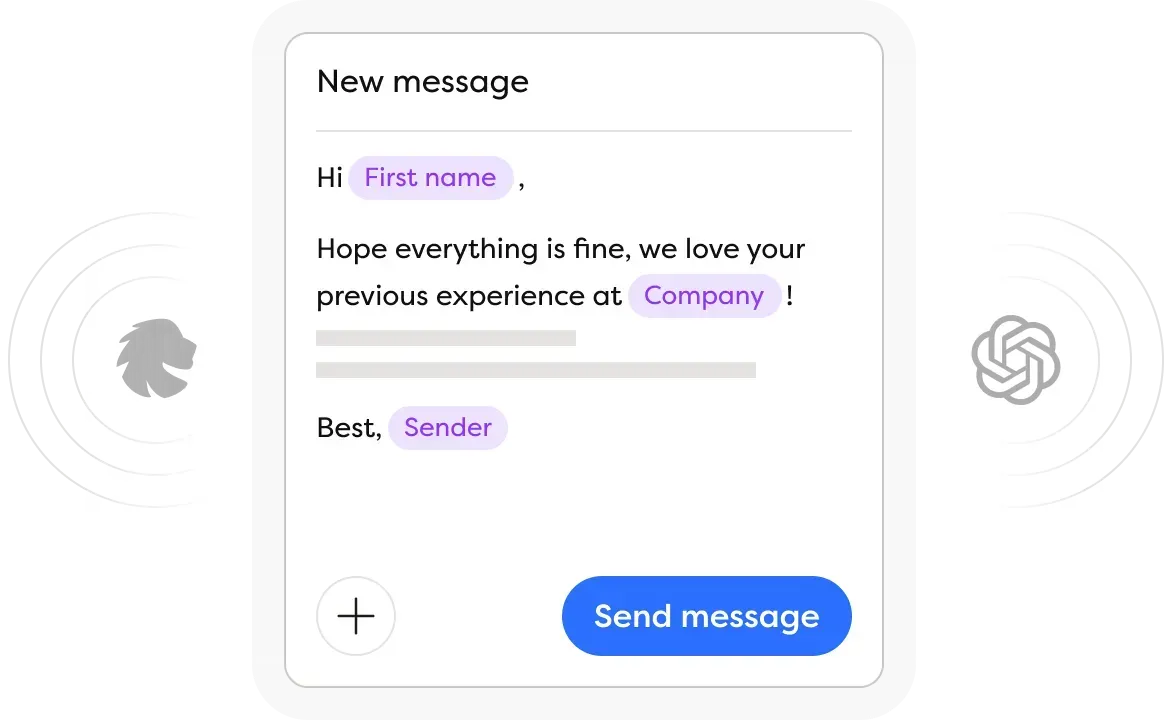
As you can see on the screenshot, you will also be able to ask the AI to adapt each message to the candidate background by using the AI personalization.
Is it possible to cancel a connection request?
You have two options to withdraw a connection request
If you are on the candidate’s profile, you can click on the “pending” button to withdraw the invitation. You have to know that you won’t be able to resend any connection request to this person for up to 3 weeks.
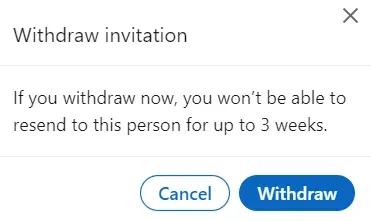
Another option you have is to go to “Your network”. On this view, you will be able to manage all your pending requests and select which one you want to withdraw.

What should you do after the candidate has accepted the connection request?
The idea, after a short notice with less than 300 characters, is to give more information about the job.
The details you can give are:
- What are the missions
- The salary and the benefits
- Maybe send a link to the job description
The most important is to set up a call.
Do not hesitate to follow up with the candidate after a few days if he does not answer your messages.
What if the candidate does not accept the connection request?
If the candidate does not accept the connection request, do not worry, it is not over yet. You have at least three other options:
- Send him a Linkedin Inmail. You will be able to provide more information about the job. He will also be notified by email that he has received the message
- Send him an email to his personal address. Using some tools, you may be able to find his personal email address and send him a message with more information about the job. If you work at a staffing firm, see our templates for introduction emails to clients for staffing agencies
- Find his phone number and do cold calling, just like business developers!
Leonar can help you do all of the above when you design your automated message sequences. You can automate multi-channel outreach with LinkedIn and email automation to combine connection requests, InMails, and emails in a single workflow.

For more information on Linkedin messaging, you can read our blog post on How to message candidates on Linkedin
Answer 3 quick questions and we will recommend the best option for your hiring workflow.
How large is your recruiting team?

Author
André FarahCo-founder
André Farah is co-founder of Leonar, where he leads product strategy for the recruiting platform. With over 8 years of experience in HR technology and recruitment process optimization, he specializes in designing sourcing workflows, outbound sequences, and candidate engagement systems. André works closely with staffing agencies and in-house talent teams to build repeatable hiring processes that scale. He regularly shares insights on Boolean search techniques, multi-channel outreach, and the operational side of modern recruiting.