Recruiterflow Reviews: What Agencies Report in 2026
We read Recruiterflow reviews across G2, Capterra, Trustpilot and Glassdoor to explain its real strengths, the honest complaints and its true cost.


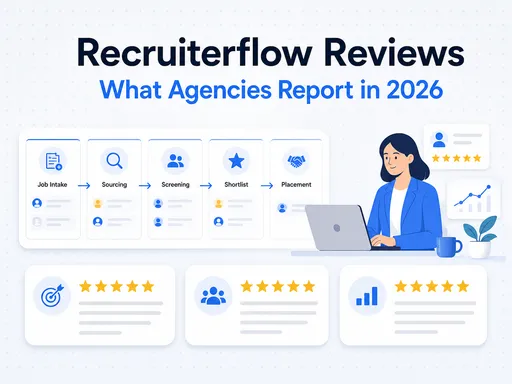
Recruiterflow is one of the best-reviewed tools built only for recruiting agencies, and its ratings back that up. On the large buyer marketplaces it sits near the top of its category. Yet the smaller review sites and the employee pages tell a slightly different story, and the price of its AI layer is harder to pin down than the headline $149 suggests.
Both pictures can be true at once. A five-person agency running clean outbound sequences has a very different experience from a firm that needs deep reporting and full desktop workflows on a phone. We read reviews across G2, Capterra, Trustpilot and Glassdoor, checked Recruiterflow’s live documentation and pricing, and turned the pattern into a buying procedure you can run yourself.
Recruiterflow reviews at a glance: the short answer
Recruiterflow is rated 4.7 out of 5 from 332 Capterra reviews and 4.6 out of 5 from more than 160 G2 product reviews, both checked on 2026-08-22. Ease of use and customer support are the highest-scoring themes, with Capterra showing 4.7 for ease of use and 4.8 for customer service.
Those are strong numbers for an agency ATS. The current G2 summary highlights ease of use, support, interface quality and time-saving automation. Capterra reviewers also praise the Chrome extension and onboarding support. Recruiterflow’s customer page says more than 1,700 agencies use the product, which fits the volume of positive reviews.
The current concerns are narrower than older reviews suggest. A recent G2 reviewer found report setup awkward, and another found imports cumbersome even with the Chrome extension. Recruiterflow’s June 2026 documentation now confirms Boolean search inside candidate files, a mobile app for Candidates and Contacts, and one-click LinkedIn import. The remaining question is whether those current workflows cover your team’s exact needs.
The short verdict: Recruiterflow is a genuinely good agency ATS for small and mid-sized outbound teams. The question is not whether it is well-built, but whether its known gaps and its quote-only AI tier matter for how your desk works.
How we read Recruiterflow reviews across four very different populations
We did not average every score into one number. That would hide the most useful signal, which is that different review sites draw from different kinds of people.
We used Recruiterflow’s own pricing page and Help Center for current product facts, because plans and features change often. We took verified sentiment from G2 and Capterra, which collect product reviews at scale. We read Trustpilot separately because its sample is small. We treated Glassdoor as employee sentiment, not software evidence, and Recruiterflow’s customer stories as marketing rather than neutral reviews.
Every figure in this article carries the date we checked it. Review counts and scores drift week to week, so a single stat quoted without a date is close to useless. Where a number moved between our own checks, we say so rather than pick the flattering version.
What agencies genuinely like about Recruiterflow
A page that only attacks a well-rated product is not honest, so start with what reviewers clearly value. The strongest theme in G2’s current review summary is that Recruiterflow is easy to learn. Recruiters describe a clean layout, a short ramp for new hires and a workflow that fits how an agency actually moves a candidate from sourced to placed.
Support is the second theme. Across Capterra’s 332 reviews and G2, reviewers describe helpful answers and support during setup. For a small agency without an internal admin, that responsiveness is often the difference between a tool that gets used and one that stalls.
Outbound automation is the third. Recruiterflow’s sequences and its Chrome extension let a recruiter pull profiles, enroll them and follow up without leaving the tool. G2’s review summary names automation as a recurring positive, while Capterra reviews praise extension and automation value. That strength is worth crediting before we look at where the reviews split.
Where the Recruiterflow review population splits
The interesting part of any review set is not the average. It is the line that separates the happy reviewers from the frustrated ones. For Recruiterflow, current evidence points to three tests.
The first is reporting depth. One May 2026 G2 review praises consultant metrics and funnels but says report setup and hiring-process analysis could be easier. That is a specific workflow concern, not proof that Recruiterflow lacks reporting. Ask the vendor to recreate your weekly manager report.
The second is search scope. Recruiterflow’s June 2026 Boolean-search documentation confirms AND, OR, NOT, quotes and parentheses inside attached candidate and contact files. It does not apply that file query to notes, activity logs or custom fields. Test your real CV queries and the other fields your recruiters expect to search.
The third is import and migration work. A December 2025 G2 reviewer called contact and candidate imports cumbersome even with the extension. Recruiterflow’s current LinkedIn import guide documents direct one-click profile import, with PDF as an optional second method when you want the full resume. Trustpilot’s small sample includes migration complaints, so test both daily sourcing and historical data migration rather than treating them as the same workflow.
Why Trustpilot and Glassdoor tell a different Recruiterflow story than G2 and Capterra
If you only read Trustpilot, you would see a much lower score. On 2026-08-22 it showed 3.2 from just 15 reviews. That is a tiny sample beside the product-review marketplaces. A few new reviews can move its average much more sharply.
Compare that with G2 at 4.6 from more than 160 product reviews and Capterra at 4.7 from 332. The larger samples give a more stable view of typical product satisfaction.
Glassdoor is a separate case that is easy to misread. Its Recruiterflow page holds employee reviews of the company as a workplace, not customer reviews of the software. Those pages answer “what is it like to work there,” which has nothing to do with whether the ATS fits your desk. Weight the big buyer marketplaces for the average, and read the small samples for specific, detailed complaints you can then test.
The complaint reviews rarely price out: what AIRA actually costs above $149
Here is the gap reviews mention but almost never quantify. On 2026-08-22, Recruiterflow published exactly one price: the Platform plan at $149 per user per month, billed monthly or annually. It includes the ATS and CRM, multichannel sequences, recruitment and sales automation, Chrome-extension sourcing, reports and API access.
The AI lives on a different plan. The AIRA plan adds the AIRA agents, including a notetaker, a matchmaker, job-change alerts and submission and task agents, plus omnichannel communication sync, a phone and email finder and custom BI dashboards. Its price is not published. The page shows “custom pricing” and invites you to contact sales.
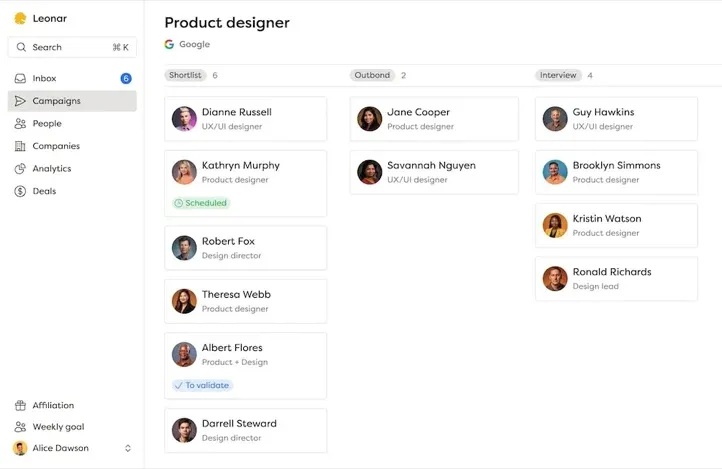
Example Leonar recruiting pipeline, shown as a workflow reference rather than evidence about Recruiterflow.
That is worth sitting with. Recruiterflow’s pricing page carries the line “No add-ons. No surprises. No extra costs,” yet the AI, the enrichment finder and the deeper reporting sit on the one tier without a public number. The entry price is honest and clear. The cost of the layer most agencies now want, the AI and BI layer, only appears after a sales call. So build the real bill before you compare. Ask for the AIRA quote, the seat minimum and the renewal terms, then set that total next to any platform that publishes an AI-inclusive price.
Who should still pick Recruiterflow
Recruiterflow is the right call for a clear kind of agency. If you run a small or mid-sized recruiting or staffing firm, source mostly through LinkedIn and a Chrome extension, and want strong outbound automation with helpful support, the G2 reviews are on your side. The product is purpose-built for that workflow, and the 4.6 to 4.7 buyer scores reflect real satisfaction.
It is an especially good fit when your reporting needs are moderate, Boolean search inside attached files matches your search process, and the mobile app’s Candidates and Contacts scope covers your work away from a laptop. Many agencies will fit inside those boundaries.
Be more cautious if AI sourcing and matching are central to your plan, if leadership needs deep custom reporting, or if recruiters need jobs, reporting and campaigns from their phones. Recruiterflow’s mobile documentation says those areas remain on desktop, and the AI answer sits behind a quote you cannot see today. None of this makes Recruiterflow a bad tool. It makes it a tool you should test against your own must-haves.
A reference-call and trial checklist to run before you sign
A polished demo hides the gaps that reviews reveal. Reproduce one real working week, and add a reference call with an agency of similar size and workflow. Run these seven checks.
1. Rebuild a real sequence
Create your actual multichannel follow-up, enroll ten test contacts and watch deliverability, timing and failure visibility. This is Recruiterflow’s strongest area, so confirm it lives up to the reviews on your setup.
2. Import from LinkedIn the way you work
Add profiles through the Chrome extension during a normal sourcing session. Test the direct one-click profile import first, then the optional PDF method for a full resume. Time both paths and check the fields each one captures.
3. Search your resume database
Load real CVs and run the searches your recruiters use daily. Test AND, OR, NOT, quotes and parentheses in the Search Inside Files filter. Then confirm whether your team also needs those queries across notes, activities or custom fields, which the file search does not cover.
4. Ask for the full AIRA quote
Request the AIRA plan price in writing, with the seat minimum and what each agent costs. Compare that total, not the $149 entry price, against other platforms.
5. Build the reports your leaders need
Recreate the exact dashboards your managers ask for. Reporting receives mixed comments on G2, so verify your exact workflow before you rely on it.
6. Test the mobile experience
Have a recruiter use the current iOS or Android app for a day. Confirm that candidate and contact profiles, notes, tasks, tags, calls, files and scorecards cover their mobile work. Jobs, reporting and campaigns remain desktop workflows in Recruiterflow’s June 2026 documentation.
7. Call a reference customer
Ask Recruiterflow for an agency of your size and workflow. Ask them about migration, reporting, the AIRA cost and what they would change. The detailed migration reports in Trustpilot’s small sample make implementation a useful reference-call topic, but they do not establish a typical outcome.
Where Leonar fits if you need published AI pricing and broader outreach
If your evaluation keeps circling the quote-only AI tier and how sourcing connects to outreach, it is worth putting Recruiterflow and Leonar side by side. That platform is built for agencies of 3 to 30 recruiters that run heavy LinkedIn sourcing and outbound.
Leonar Professional costs $199 per user per month, $169 with a 12-month commitment billed monthly, or $149 with annual prepayment. It includes AI Copilot, sourcing and matching, multichannel sequences, a centralized inbox, contact enrichment credits, and API and MCP access. Tailored AI workflow implementation and support are quoted separately, from five users. Current Leonar pricing.
The second is the sourcing and outreach workflow. It pairs a large profile database and AI-assisted shortlist scoring with multichannel sequences across email and WhatsApp, plus LinkedIn steps as recruiter tasks, in one workspace, so a recruiter can go from a sourced profile to a reviewed follow-up without switching tools. If you want the switcher view instead of the head-to-head, our guide to the best Recruiterflow alternatives for agencies scores six tools on price, AI depth and LinkedIn workflow. For a broader baseline, the recruiting software pricing comparison lays out published tiers side by side.
None of this makes Recruiterflow the wrong choice. It makes the decision one you should base on your workflow and your full price, not on a single average rating.
Frequently asked questions about Recruiterflow reviews
Is Recruiterflow a good ATS for recruiting agencies?
For most small and mid-sized agencies, yes. Recruiterflow is built for recruiting and staffing firms, and its buyer reviews are strong. On 2026-08-22, Capterra showed 4.7 out of 5 from 332 reviews and G2 showed 4.6 from more than 160 product reviews.
Recruiterflow also documents Boolean candidate-file search and an iOS and Android app for Candidates and Contacts. Larger firms should test reporting and whether the mobile app’s current scope covers their work.
What do Recruiterflow users complain about most?
Current sources do not support claims that Recruiterflow lacks Boolean resume-file search, lacks a mobile app, or requires a PDF for every LinkedIn import. Its June 2026 documentation shows Boolean file search with AND, OR and NOT, an iOS and Android app for Candidates and Contacts, direct one-click LinkedIn import, and an optional PDF method for a full resume.
Current G2 reviews raise narrower concerns about reporting setup and import speed, while Trustpilot includes migration and billing complaints in its 15-review sample. Treat these as tests, not universal findings.
How much does Recruiterflow cost in 2026?
On 2026-08-22 Recruiterflow published one public price: the Platform plan at $149 per user per month, billed monthly or annually. It includes the ATS and CRM, multichannel sequences, recruitment and sales automation, Chrome-extension sourcing, reports and API access.
The AIRA plan, which adds the AI agents, omnichannel sync, phone and email finder and custom BI dashboards, is quote-only and shows “custom pricing” rather than a number. So the entry price is clear, but the cost of the AI and reporting layer is not public until you talk to sales.
Does Recruiterflow include AI in its base plan?
No. On 2026-08-22 the $149 Platform plan covered the ATS, CRM, sequences and automation, while the AIRA agents, the phone and email finder and the custom BI dashboards sat on a separate quote-only plan.
Recruiterflow markets AIRA as “no add-ons, no surprises,” but the AI tier itself has no published price. If AI sourcing, matching or notetaking is central to your evaluation, ask for the AIRA quote early so you compare it against platforms that publish an AI-inclusive price.
Why do Trustpilot reviews of Recruiterflow look worse than G2?
Because they come from very different populations. On 2026-08-22, G2 showed 4.6 from more than 160 product reviews and Capterra showed 4.7 from 332, while Trustpilot showed 3.2 from only 15 reviews.
A small sample can move sharply when a few reviews arrive. Glassdoor is different again, since those are employee reviews of Recruiterflow as a workplace, not customer reviews of the product. Weight the large buyer marketplaces more, and read the small samples for detail, not for the average.
When should an agency compare Recruiterflow with Leonar?
The comparison is most useful for agencies of 3 to 30 recruiters that run heavy LinkedIn sourcing and outbound, and that want AI sourcing and multichannel outreach at a price they can see before a sales call.
Recruiterflow gates its AIRA agents behind a custom quote. Leonar Professional costs $199 per user per month, $169 on a 12-month commitment billed monthly, or $149 with annual prepayment. Test profile organization, shortlist scoring, sequence building and the full price on both, then pick the workflow your recruiters will actually use every day.
Read the reviews, then run your own trial
Keep your sourcing, outreach and follow-ups in one workspace, see who to contact next, and price the whole stack before you commit.
Frequently asked questions
Is Recruiterflow a good ATS for recruiting agencies?
For most small and mid-sized agencies, yes. Recruiterflow is built for recruiting and staffing firms, and its buyer reviews are strong. On 2026-08-22, Capterra showed 4.7 out of 5 from 332 reviews and G2 showed 4.6 from more than 160 product reviews. Recruiterflow also documents Boolean candidate-file search and an iOS and Android app for Candidates and Contacts. Larger firms should test reporting and whether the mobile app's current scope covers their work.
What do Recruiterflow users complain about most?
Current sources do not support claims that Recruiterflow lacks Boolean resume-file search, lacks a mobile app, or requires a PDF for every LinkedIn import. Its June 2026 documentation shows Boolean file search with AND, OR and NOT, an iOS and Android app for Candidates and Contacts, direct one-click LinkedIn import, and an optional PDF method for a full resume. Current G2 reviews raise narrower concerns about reporting setup and import speed, while Trustpilot includes migration and billing complaints in its 15-review sample. Treat these as tests, not universal findings.
How much does Recruiterflow cost in 2026?
On 2026-08-22 Recruiterflow published one public price: the Platform plan at $149 per user per month, billed monthly or annually. It includes the ATS and CRM, multichannel sequences, recruitment and sales automation, Chrome-extension sourcing, reports and API access. The AIRA plan, which adds the AI agents, omnichannel sync, phone and email finder and custom BI dashboards, is quote-only and shows "custom pricing" rather than a number. So the entry price is clear, but the cost of the AI and reporting layer is not public until you talk to sales.
Does Recruiterflow include AI in its base plan?
No. On 2026-08-22 the $149 Platform plan covered the ATS, CRM, sequences and automation, while the AIRA agents, the phone and email finder and the custom BI dashboards sat on a separate quote-only plan. Recruiterflow markets AIRA as "no add-ons, no surprises," but the AI tier itself has no published price. If AI sourcing, matching or notetaking is central to your evaluation, ask for the AIRA quote early so you compare it against platforms that publish an AI-inclusive price.
Why do Trustpilot reviews of Recruiterflow look worse than G2?
Because they come from very different populations. On 2026-08-22, G2 showed 4.6 from more than 160 product reviews and Capterra showed 4.7 from 332, while Trustpilot showed 3.2 from only 15 reviews. A small sample can move sharply when a few reviews arrive. Glassdoor is different again, since those are employee reviews of Recruiterflow as a workplace, not customer reviews of the product. Weight the large buyer marketplaces more, and read the small samples for detail, not for the average.
When should an agency compare Recruiterflow with Leonar?
The comparison is most useful for agencies of 3 to 30 recruiters that run heavy LinkedIn sourcing and outbound, and that want AI sourcing and multichannel outreach at a price they can see before a sales call. Recruiterflow gates its AIRA agents behind a custom quote. Leonar Professional costs $199 per user per month, $169 on a 12-month commitment billed monthly, or $149 with annual prepayment. Test profile organization, shortlist scoring, sequence building and the full price on both, then pick the workflow your recruiters will actually use every day.
Answer 3 quick questions and we will recommend the best option for your hiring workflow.
How large is your recruiting team?

Author
Pierre-Alexis ArdonCo-founder
Pierre-Alexis Ardon is co-founder of Leonar, where he focuses on building AI-powered recruiting systems, assisted sourcing, and search optimization. With a background in engineering and over 7 years working at the intersection of artificial intelligence and talent acquisition, he designs the algorithms that power Leonar's candidate matching and workflow assistance. Pierre-Alexis advises recruitment agencies on their digital transformation and regularly publishes analyses on how AI agents are reshaping HR workflows. He is passionate about making advanced technology accessible to recruiters who are not engineers.